Herbs You Should Never Plant Together
Herbs are a great way to add flavor and nutrients to your food, but did you know that some herbs should not be planted together? Planting incompatible herbs together can stunt their growth, reduce their yields, or even kill them.
In this blog post, we will discuss some of the herbs that you should never plant together. We will also provide some tips on how to companion plant herbs so that they can thrive in your garden.
Why shouldn't you plant certain herbs together?
There are a few reasons why you should avoid planting certain herbs together. First, some herbs produce chemicals that can inhibit the growth of other plants. For example, fennel produces a chemical called anethole that can stunt the growth of other herbs.
Second, some herbs have different nutrient requirements. If you plant two herbs that have competing nutrient needs, they may not be able to get the nutrients they need to grow properly.
Third, some herbs attract pests or diseases that can harm other plants. For example, rue attracts spider mites, which can also damage basil and cabbages.
Herbs you should never plant together
Here are some of the herbs that you should never plant together:
- Fennel and most other herbs: Fennel produces a chemical called anethole that can stunt the growth of other herbs. It is best to plant fennel away from other herbs, or in its own pot.
- Rue and basil: Rue and basil have a mutual dislike for each other and they can inhibit each other's growth. It is best to plant rue and basil in separate pots or areas of your garden.
- Dill and carrots: Dill and carrots can cross-pollinate, which can reduce the flavor and quality of the carrots. It is best to plant dill and carrots at least 10 feet apart.
- Cilantro and fennel: Cilantro and fennel are both very aggressive growers and they can compete for resources. It is best to plant cilantro and fennel in separate pots or areas of your garden.
- Sage and cucumbers: Sage and cucumbers are susceptible to the same diseases and can spread them to each other if planted too close. It is best to plant sage and cucumbers in separate pots or areas of your garden.
Tips for companion planting herbs
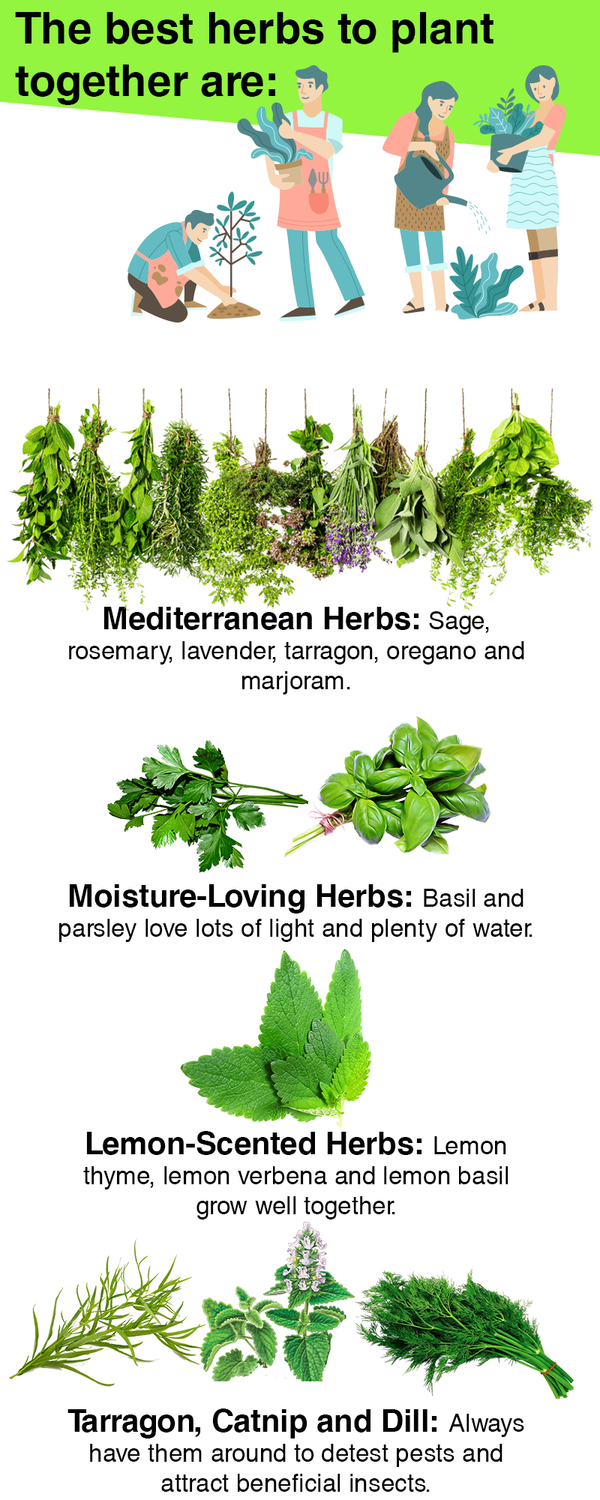
If you want to plant herbs together, there are a few things you can do to make sure they will thrive. First, choose herbs that have similar growing conditions. For example, if you live in a hot climate, you will want to plant herbs that are heat-tolerant.
Second, choose herbs that have different nutrient requirements. This will help to ensure that no one herb is competing for the same nutrients.
Third, choose herbs that attract beneficial insects. Some herbs, such as basil and lavender, attract pollinators, which can help to improve the pollination of your other plants.
Finally, experiment! There are no hard and fast rules when it comes to companion planting herbs. The best way to find out what works in your garden is to experiment with different combinations.
When you're planning your herb garden, it's important to know which herbs do and don't grow well together. Some herbs can actually inhibit each other's growth, so it's important to avoid planting them together.
For example, fennel and cilantro are two herbs that should never be planted in the same pot. Fennel has a strong, licorice-like scent that can stunt cilantro's growth. Dill and lavender are also not compatible herbs. Dill prefers acidic soil, while lavender prefers alkaline soil. If you plant these two herbs together, they will both suffer.
If you're not sure which herbs to plant together, or if you want to learn more about the specific reasons why some herbs don't grow well together, I recommend visiting Garden Wiki. This website has a comprehensive list of herbs that should not be planted together, as well as information about the specific reasons why they don't mix.
FAQ of herbs that don t grow well together
Here are the 5 most frequently asked questions about herbs that don't grow well together, along with valuable insights and solutions:
1. Which herbs should not be planted together?
There are a number of herbs that should not be planted together, either because they compete for the same resources, release toxins that harm each other, or are susceptible to the same pests and diseases. Some of the most common examples include:
- Basil and tomatoes: Basil and tomatoes compete for the same nutrients, so planting them together can stunt the growth of both plants.
- Cilantro and carrots: Cilantro releases a chemical that can inhibit the growth of carrots.
- Mint and other herbs: Mint is a very aggressive grower and can crowd out other herbs.
- Onions and chives: Onions and chives release sulfur compounds that can stunt the growth of other herbs.
- Rosemary and lavender: Rosemary and lavender have different water needs, so planting them together can lead to one plant being overwatered or underwatered.
2. How do I know if two herbs will grow well together?
There are a few things you can look for to determine if two herbs will grow well together. First, consider their water needs. Herbs with similar water needs are more likely to thrive when planted together. Second, think about their growth habits. Herbs that grow in different shapes and sizes are less likely to compete for space. Finally, consider their susceptibility to pests and diseases. Herbs that are susceptible to the same pests and diseases should not be planted together.
3. What are some tips for planting herbs that don't grow well together?
If you must plant herbs that don't grow well together, there are a few things you can do to minimize the risk of problems. First, plant them in separate containers or beds. Second, space them out so that they have plenty of room to grow. Finally, monitor them closely for signs of pests or diseases.
4. What are some companion herbs that can help each other grow?
There are a number of herbs that can help each other grow. For example, basil can repel pests from tomatoes, and mint can deter rabbits from other herbs. Some other examples of companion herbs include:
- Chives and roses: Chives can repel aphids and other pests from roses.
- Lavender and beans: Lavender can attract pollinators that help beans to flower and produce beans.
- Marigolds and tomatoes: Marigolds can repel nematodes, which can damage tomato roots.
- Parsley and carrots: Parsley can help to improve the flavor of carrots.
- Rosemary and lavender: Rosemary and lavender can help to deter pests from each other.
5. How can I improve the chances of my herbs growing well together?
There are a few things you can do to improve the chances of your herbs growing well together. First, choose herbs that have similar water needs and growth habits. Second, plant them in a location that receives the right amount of sunlight and has well-drained soil. Finally, fertilize your herbs regularly and water them deeply when the soil is dry.
Image of herbs that don t grow well together
Here are 5 different images of herbs that don't grow well together:
- Garlic and chives - Both herbs release substances that inhibit the growth of the other.
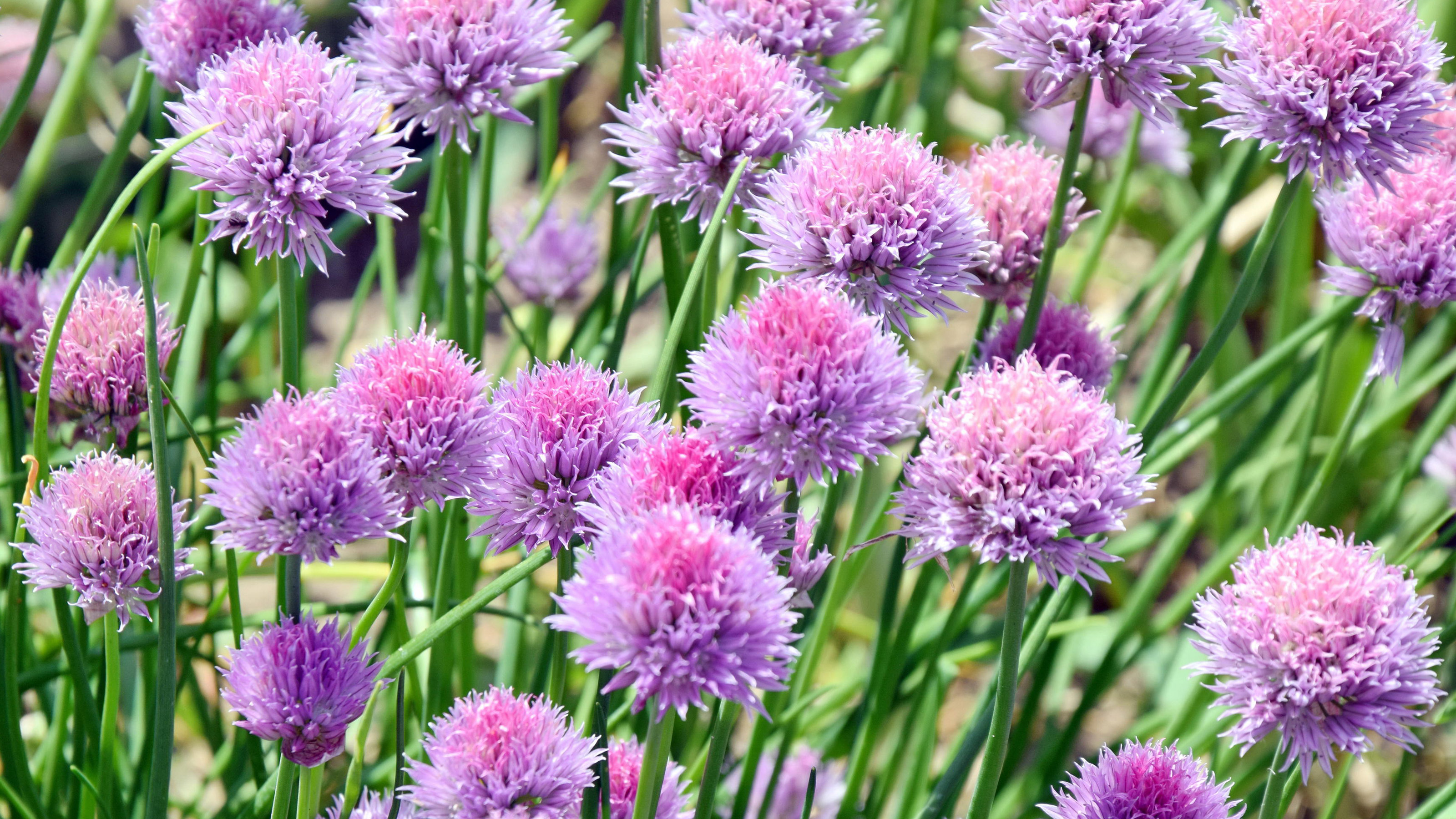
- Cilantro and mint - Cilantro releases a substance that inhibits the growth of mint. Mint, on the other hand, can take over a garden if not contained.

- Tomatoes and basil - Tomatoes and basil can grow well together, but only if they are planted far enough apart. Basil can attract pests that can damage tomatoes.
- Rosemary and sage - Rosemary and sage have similar growing requirements, but they can compete for nutrients if planted too close together.
- Parsley and dill - Parsley and dill have different water needs, so planting them together can lead to one herb being overwatered or underwatered.

Post a Comment for " Herbs You Should Never Plant Together"